
CROP ROTATION
What is it?
The practice of crop rotation involves planting different types of crops in a specific sequence, aiming to enhance both plant health and soil quality. This systematic approach helps to prevent the depletion of soil nutrients, reduces pest and disease build-up, and promotes a more diverse ecosystem. By alternating crops, growers can improve soil structure, increase soil fertility, and support eco-friendly practices. Overall, crop rotation is an effective strategy for maintaining productive and healthy land.
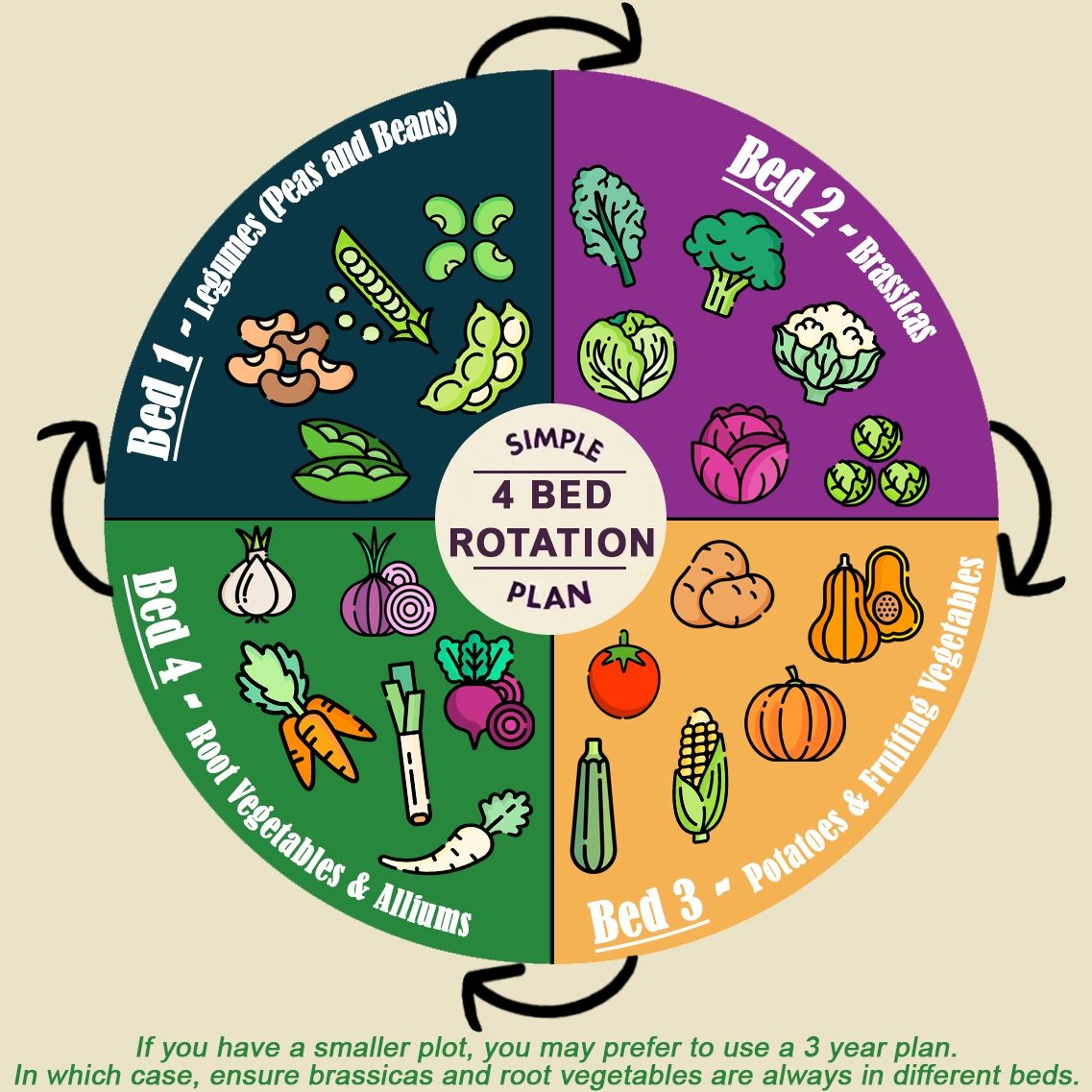
- Cabbages
- Cauliflower (inc. Romanesco)
- Kohlrabi
- Kale
- Brussels sprouts
- Swede
- Potatoes
- Sweet potatoes
- Tomatoes
- Squash
Rotating crops by type has several benefits:
- Creates healthy soil and optimal growing conditions
- Provides natural fertiliser
- Prevents crop-specific diseases
- Natural pest control
- Fewer weeds
It works because:
- Legumes add nitrogen to the soil
- Brassicas thrive in nitrogen-rich soil
- Potatoes prefer previous brassica beds
- Roots and salads don't like nitrogen, and help to break up the soil
Background image: Crop Rotation by Ayub Irawan from Noun Project (CC BY 3.0)